A Winter Evening, Arranged Around the Reading Chair
Plan a winter reading corner around useful light, a reachable surface, and a place for books, so settling in feels easy without buying a matching set.
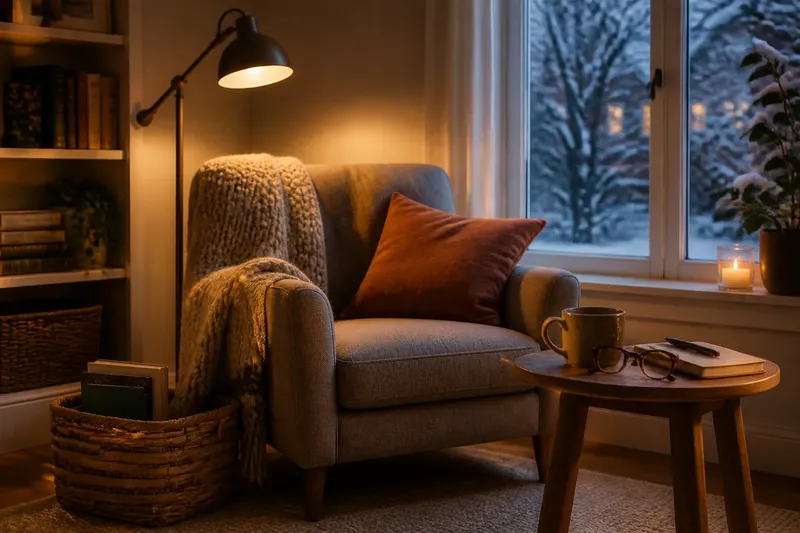
How do you make a reading corner comfortable enough to use on a dark winter evening without turning it into a shopping list? Start with the chair you already reach for, then arrange light, books, and a small surface around the way you actually read. A winter reading corner works best as a modest evening routine: a few considered adjustments before you sit, and a place for each thing your hands need.
Let the chair set the limits
Begin on an ordinary evening, not while imagining a perfect room. Sit in the chair you expect to use. Notice where your feet rest, which side you naturally turn toward, and whether you read with a book open in your lap or held closer to your face. Those small habits determine where a lamp and table will be useful.
Pay attention to the chair’s surroundings as they are. A chair beside a bookcase has a different set of needs from one near a sofa or a window. The point is not to clear the whole room or create a staged nook. It is to give this particular seat a calm, workable edge.
Make a short note on paper, or in the Notes app on your phone, of what interrupts reading now. Perhaps the book is left on the floor, the room light casts a shadow across the page, or a cup has nowhere stable to go. Choose the one interruption that matters most. The corner can improve by solving that problem before it gathers more accessories.
Give the light a reading job
Room lighting and reading lighting do different work. A ceiling fixture can make it easy to move around, but its light may reach the page from an awkward direction. A task lamp gives the page more focused light. A shaded floor lamp may soften the area around the chair while still helping you read, depending on its position and design.
Before moving furniture, try the light already in the room. Sit down after dusk with a few pages and notice whether your hand or the book itself throws a distracting shadow. If it does, the lamp may need to move to the other side, or closer to the chair. Adjust its angle so the light falls across the page rather than directly into your eyes.
Think about the light source as well as the lamp. A bulb that feels harsh against a pale wall can make a quiet corner seem more alert than you want. A warm-toned bulb may suit an evening routine, while a task lamp with a more neutral tone can help the printed page remain clear. Check the fixture and bulb labels and follow their instructions when selecting a replacement.
Keep the lamp’s switch within reach if its design allows it. The useful test is simple: can you turn it on after sitting down without leaning across a drink or shifting the chair? If not, reposition the lamp or choose a reachable switch arrangement. Avoid routing a cord where feet or a chair leg can catch it; if the safe placement is unclear, ask a qualified electrician rather than improvising with wiring.
Keep books close without building a pile
A reading corner needs a small, deliberate supply of books, not an expanding stack. Choose a place that matches the scale of your reading: a shelf within reach, a basket beside the chair, or a single book resting on the table. The choice matters less than being able to return the book to the same place when the evening ends.
Decide what belongs there by considering the next few evenings. A current novel, a library book, and a slim notebook may be enough. If you tend to read several books at once, keep only the ones in active use nearby. A crowded basket is difficult to search, and a pile on the floor can turn a restful seat into a reminder of unfinished tasks.
Use a basket or box that is easy to lift and does not obscure the space around the chair. A shallow container can make it easier to see a book’s cover than a deep one. If you already have a narrow shelf, leave a little open room for the book you are reading rather than filling every space with objects.
Say you settle into an armchair beside a window and keep losing your place because your paperback ends up beneath a folded throw. You could put a small basket on the side of the chair that is easiest to reach and reserve it for the current book and a bookmark. The expected observable result is that the book has a consistent home and is visible when you sit down, without requiring a new bookshelf or a full room rearrangement.
Make the nearby surface do one useful thing
A side table is helpful only if its top is at a comfortable height and close enough to reach. It might hold a mug, reading glasses, a phone, or a notebook. It does not need to hold all of them at once. A small tray can gather a few loose items, but a tray that takes over the surface simply creates a smaller, more crowded surface.
Try the reach from your seated position before deciding where to place a table. Can you set down a cup without twisting? Can you pick up your glasses without leaning forward? If the table feels too far away, bring it closer if the layout permits. If it blocks your knees or makes the chair awkward to enter, move it aside and try another arrangement.
There is no requirement to buy a conventional side table. A sturdy stool, a low cabinet, or an existing end table may work if it is stable and suitable for the objects you plan to place on it. Do not balance drinks on an unstable stack of books or use furniture in a way its maker does not recommend. When the label or instructions call for a particular use, follow them.
Leave the tabletop partly open. That space is not wasted; it gives you somewhere to put something down while you adjust the lamp or close the book. A clear surface also makes the end-of-evening reset easy: return the book to its basket or shelf, take the cup to the kitchen, and leave the chair ready for another night.
What should you adjust before the next evening?
Where should a reading lamp go?
Place it where its light reaches the page without shining straight into your eyes. Sit in the chair and check for shadows from your hand or the book, then adjust the lamp’s position and angle.
What belongs beside a reading chair?
Keep only the items you use during a typical reading session, such as a current book, glasses, and a stable place for a drink. A notebook or bookmark can stay nearby if you regularly reach for one.
How can a small corner feel less crowded?
Give books one container or shelf and keep the table mostly clear. Remove objects that have no role in reading, rather than adding another organizer to hold them.
Can a reading corner work without a side table?
Yes. A nearby shelf, a suitable stool, or a clear ledge can provide a place for a book or glasses. If nothing is within a comfortable reach, it may be easier to shift the chair slightly than to add a large piece of furniture.
Use the first week to refine the routine
Treat the first evening as a trial of the arrangement, not a final reveal. Sit down with the book you are currently reading and use the lamp, book storage, and surface as planned. Notice the moments when you have to stand up, stretch awkwardly, or move something out of the way. Those are useful clues about the arrangement, not reasons to replace everything.
On the next evening, change one thing at a time. Move the lamp before moving the chair. If the page becomes easier to see but the switch is awkward, reconsider where the lamp stands. If the books remain nearby but the table feels crowded, remove an item before looking for a larger table. Small changes make it easier to identify what the chair actually needs.
After several evenings, take stock of what you use. Keep the notebook if you have reached for it; return it elsewhere if it remains untouched. A basket should hold active reading, not books you feel obliged to finish. The corner is allowed to change as your reading changes.
At the end of each session, make a brief reset part of closing the book. Put the book back in its place, carry away the cup, and leave the lamp switch easy to find. This takes little effort, but it changes the next evening’s beginning: you arrive at a chair that is ready, rather than a small collection of yesterday’s errands.
Let comfort come from what is within reach
A winter reading corner does not need a matching chair, lamp, basket, and table. It needs a good relationship between the seat and the things that support reading. Useful light reaches the page; books have a home; and a nearby surface holds only what you need. Start with those conditions, then let repeated evenings tell you what deserves to stay.
If you are planning a winter reading corner, make one last check before the room grows dim: sit down, turn on the light, and reach for your book without shifting your seat. If those actions feel simple and the area around you remains calm, the arrangement is doing its job. The best final adjustment may be to stop adding things and enjoy the quiet space you have made.